Background Info

Python Strings: are a sequence data type that are immutable.
- Operators and functions applied to strings returns a new string derived from the original.
- Strings can be delimited by single (' '), double (" "), and triple (''' ''') quotations: Strings can contain tab (\t) and newline (\n) characters.
- Operators:
in, +, * - Built-in functions:
len, max, min - String elements can be indexed and sliced like list sequences, but these methods cannot be used to add, remove, or replacement elements.
Why is this important?
Strings are an important datatype and knowing how to create, index, and return new versions of strings is a critical skill.
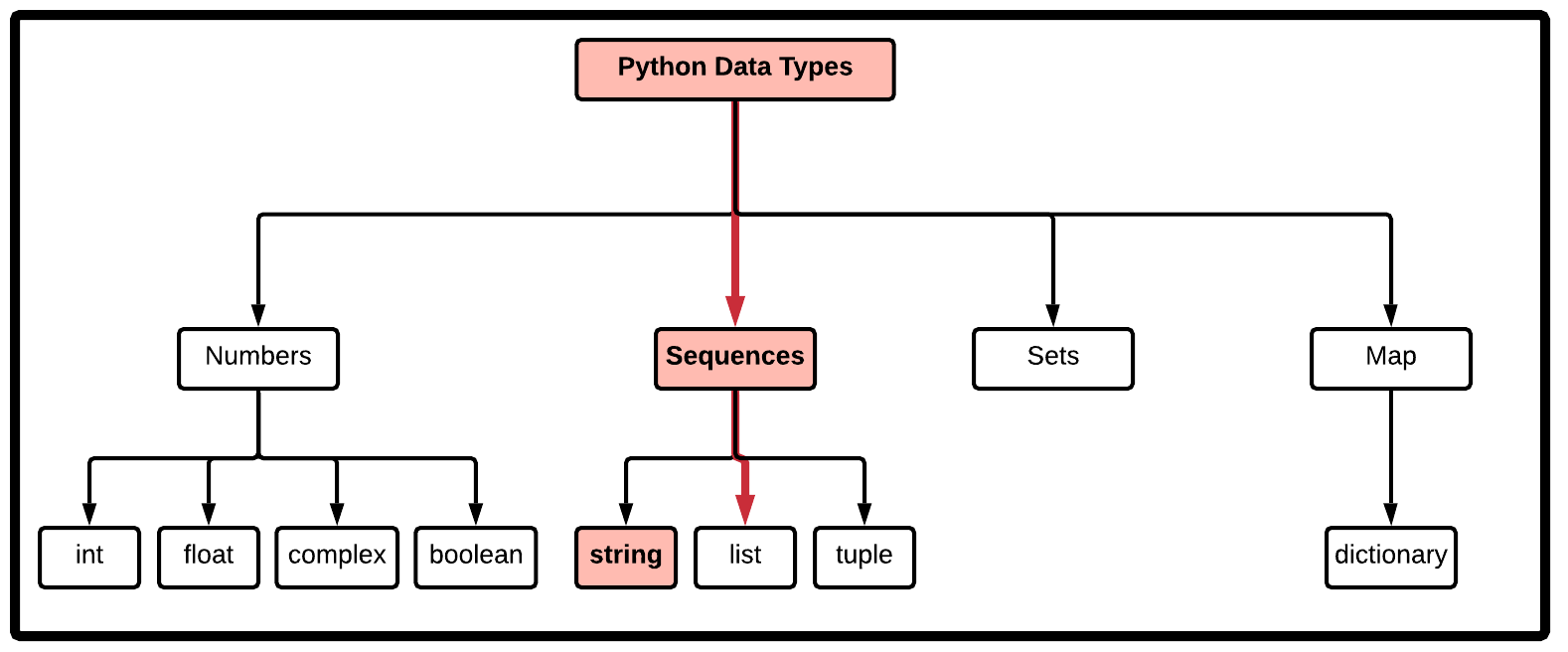
Content
Creating Strings
Create a string using str() constructor:str()Create a string with variable assignment:
variable = "string"
Concatenate and Combine Strings
Combine using "+":
string + stringCombine using " ":
string + "string"
Operators and Common Built-in Functions
Operator Functions:element in setReturn number of elements in a set:
len(set)
Changing Case Functions
Title case.string.title():
Upper Casestring.upper():Lower Case
string.upper():
Indexing Strings
Returns the first index that matches character(s)
string.index('character(s)')
Replace Function
string.replace(old, new, count)
Dealing with Whitespace
Strip white space on right side:string.rstrip()Strip white space on left side:
string.lstrip()Strip white space on both side:
string.strip()